

HOUSE leaders have filed a resolution seeking to institutionalize the participation of civil society groups as official non-voting observers in the budget hearings of the powerful Appropriations Committee, in what they described as historic move to promote transparency and people-centered governance.
The measure, introduced by Speaker Ferdinand Martin G. Romualdez and Tingog Party-list Reps. Yedda Marie K. Romualdez, Andrew Julian K. Romualdez and Jude A. Acidre affirm the House’s commitment to inclusive development and meaningful public participation in one of the most consequential legislative functions: crafting the national budget.
“We want a budget process that truly listens to the people. Mahalagang may boses ang taumbayan sa umpisa pa lang ng budget deliberation upang lalong matugunan ang mga pangangailangan ng mamamayan,” said Speaker Romualdez.
“Kaya gusto natin siguraduhin na may kinatawan ang civil society sa mga pagdinig. This will ensure that the budget process is transparent and accountable to the people,” Speaker Romualdez added.
House Resolution (HR) No. 94, which the authors hope to adopt before the start of the 2026 budget cycle, seeks to accredit bonafide people’s organizations and allow them to participate as non-voting observers in all public hearings of the House Committee on Appropriations and its sub-committees.
Under the proposed guidelines, the Committee on Appropriations, in coordination with the Committee on People’s Participation, will determine the eligibility, accreditation process and scope of civil society groups’ participation in accordance with House rules.
The resolution cites the 1987 Constitution, particularly Sections 15 and 16 of Article XIII, which recognize the right of the people and their organizations to participate in decision-making and protect their collective interests.
It also references Section 3, Chapter 2, Book VI of the Revised Administrative Code, which frames the budget as an instrument of national development.
The authors emphasized that people’s organizations working in key sectors such as education, public health, social welfare, environment, agriculture and local governance bring critical expertise that can guide more responsive and grounded budgeting.
The push to involve civil society in the budget process aligns with President Ferdinand “Bongbong” Marcos Jr.’s earlier calls for better fiscal governance and his administration’s efforts to realign government spending toward key priorities such as infrastructure, health and digitalization.
Speaker Romualdez has also repeatedly called for a more open bicameral conference committee process when reconciling the final version of the budget with the Senate to further promote transparency.
“It’s about giving citizens a seat at the table, through civil society organizations,” Speaker Romualdez said.
 INTERPOL ISSUES RED NOTICE VS ATONG ANG
  ZALDY CO ARRESTED IN PRAGUE, CZECH REPUBLIC
  CHIZ: USE 14B WINDFALL FROM VAT ON FUEL FOR AYUDA
  PCO FILES COMPLAINTS VS 3 FB ACCOUNTS OVER FALSE CLAIMS ON PRESIDENT MARCOS’ HEALTH
  GOV’T LAUNCHES TUPAD TULOY PASADA PROGRAM TO SUPPORT TRANSPORT WORKERS
  PALACE STUDIES PROPOSAL TO SUSPEND PENSION PREMIUM CONTRIBUTIONS
 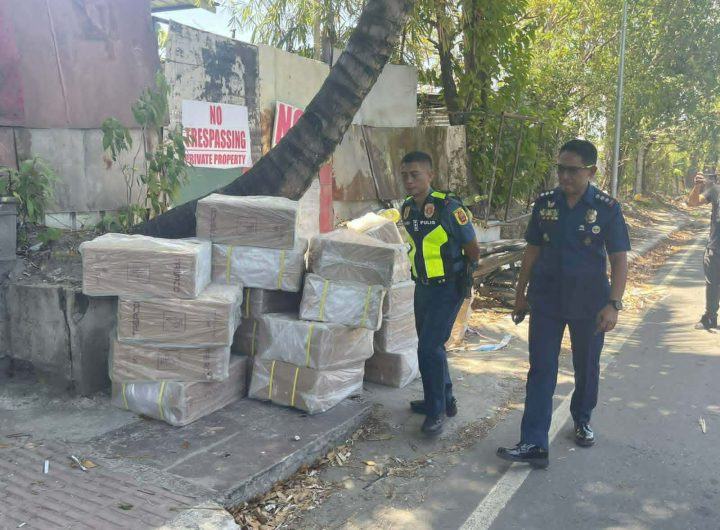 NEGROS COPS’ 1-DAY OPERATION NETS P55.8-M ILLICIT CIGARETTES